
In this article you’ll learn:
- Why the first hour of a crisis matters more than any other
- The three questions every organisation should answer immediately
- Why speed and honesty beat silence every time
- How preparation protects your reputation before a crisis even happens
Most people think crisis PR starts with the statement.
It doesn’t.
It starts with the phone call that wakes you up at 4am.
I’ve had more than a few of those over the years.
There’s a world of difference between planning a press release over your morning coffee and suddenly finding yourself at the centre of a fast-moving story that’s unfolding by the minute.
One is business as usual.
The other is where reputations are won or lost.
In those moments, there isn’t time for lengthy meetings or carefully crafted messaging. People need information, journalists need answers and your customers want reassurance.
I’ve worked with airlines, hospitality businesses, venues and visitor attractions through live incidents, and if there’s one thing I’ve learnt it’s this: people rarely judge an organisation for facing a problem. They judge it by how it responds.
That first hour can make all the difference.
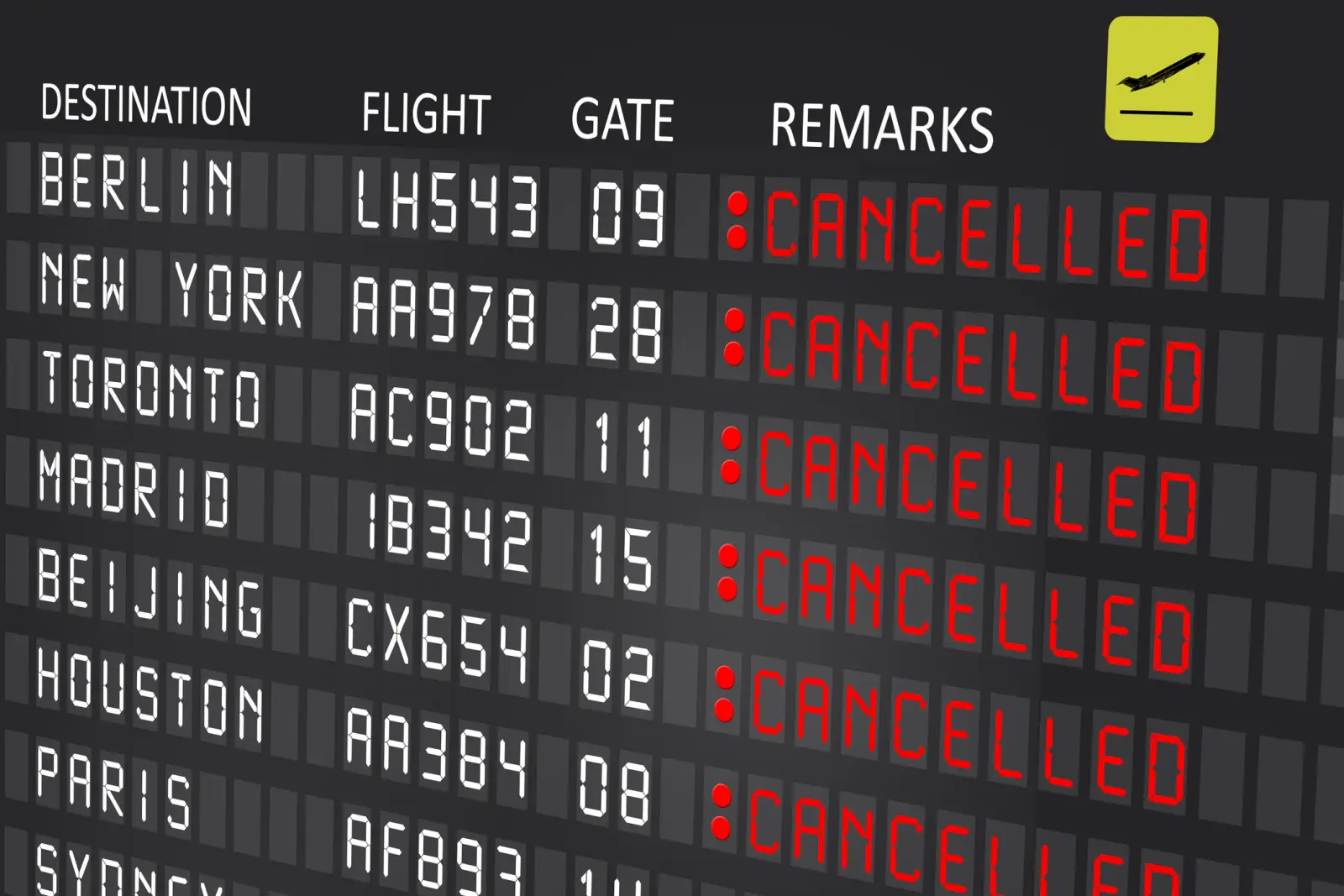
When Heathrow closed before Christmas
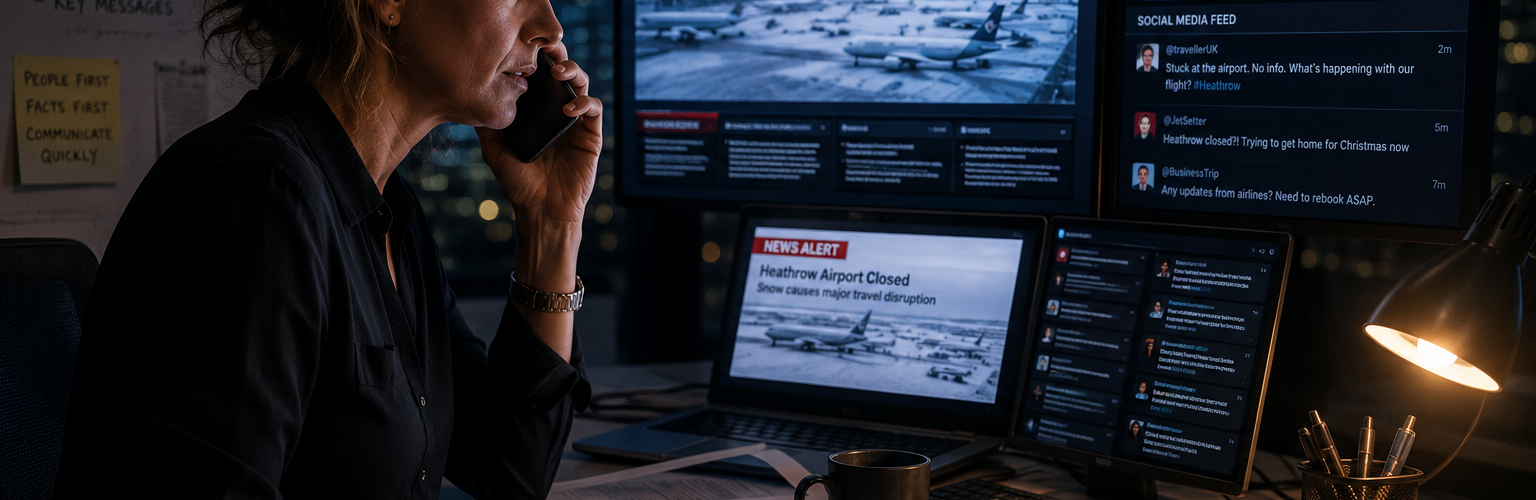
One Sunday morning, just two days before Christmas, my phone rang while I was in bed with flu.
Heavy snowfall had forced Heathrow Airport to close.
At the time, I was managing UK PR for Finnair.
My first call was to the UK Director of Sales.
He had no idea Heathrow had shut.
Next, I called the airline’s emergency communications team in Helsinki.
They didn’t know either.
For goodness’ sake, Helsinki and even Moscow were buried in snow and carrying on almost as normal, which made Heathrow’s closure feel even more surreal.
Meanwhile, I was lying in bed convinced my face was about to fall off with flu.
There wasn’t time to feel sorry for myself.
There was work to do.
Speed beats silence
Within minutes I was in full crisis communications mode.
The priorities were simple.
- Draft clear passenger advice.
- Get approval as quickly as possible.
- Distribute it to the UK media.
- Publish updates through Finnair’s Twitter account, which I’d set up for the airline.
- Make sure passengers knew exactly where to go for reliable information.
Because we acted quickly, Finnair became one of the first airlines to explain what had happened and, more importantly, what customers needed to do next.
Looking back, it wasn’t because we had all the answers.
We didn’t.
It was because we communicated before uncertainty had the chance to take over.
In my experience, silence almost never protects a reputation.
If you don’t fill the information gap, someone else will. And that “someone else” is often rumour, speculation or misinformation.
I’d always rather be leading the conversation than trying to catch up with it.

The three questions every organisation should answer
When a crisis unfolds, organisations often focus on the media first.
Actually, I think there are three much more important questions to answer before anything else.
They’re deceptively simple, but they stop panic taking over.
- What do we know?
Separate facts from assumptions.
Don’t repeat information simply because it’s circulating online.
If you don’t know something, don’t pretend you do.
- What don’t we know yet?
It’s perfectly acceptable to say you’re still investigating.
People understand that situations evolve.
What damages trust is pretending you’ve got all the answers when you haven’t.
- What are we doing about it?
Customers, employees and stakeholders want to know that somebody is taking responsibility.
Whether you’re helping stranded passengers, supporting customers or working alongside the emergency services, explain what’s happening and what comes next.
People are surprisingly understanding when they can see genuine action being taken.
Respond quickly, not recklessly
Responding quickly doesn’t mean rushing out inaccurate information.
It means acknowledging what’s happening.
Even a short statement explaining that you’re aware of the situation, investigating it and will provide further updates is far better than saying nothing at all.
Remember, your first statement isn’t your final statement.
It’s simply the beginning of the conversation.
In my experience, people are far more forgiving of an organisation that’s open and honest than one that disappears until it thinks it has every answer.
Clear communication builds confidence.
Silence rarely does.
Preparation starts long before a crisis
One of the biggest misconceptions about crisis communications is that it starts when something goes wrong.
It doesn’t.
It starts months, or even years before.
The organisations that handle crises best usually have clear approval processes, identified spokespeople, trusted media relationships and a communications plan that’s ready to put into action.
Preparation doesn’t remove the pressure.
It replaces panic with purpose.
Every minute matters
None of us gets to choose when a crisis happens.
But we can choose whether we’re prepared for it.
Whether you lead an airline, hotel, venue, travel business or growing organisation, protecting your reputation starts with communicating quickly, honestly and with the people affected at the centre of every decision.
You never get to choose when the phone rings.
But you can choose whether you’re ready to answer it.
What to remember
- The first hour of a crisis often shapes public perception.
- Respond early, even if you don’t have every answer.
- Communicate facts, not assumptions.
- Tell people what you know, what you’re still finding out and what you’re doing about it.
- Preparation before a crisis makes responding during one much easier.
- Honest, timely communication builds trust when organisations need it most.
Frequently asked questions
What is crisis PR management?
Crisis PR management is the process of protecting an organisation’s reputation during unexpected events through timely, accurate and strategic communication with customers, employees, the media and other stakeholders.
Why is the first hour of a PR crisis so important?
The first hour often determines whether your organisation controls the narrative or allows misinformation and speculation to spread. Early communication helps build confidence and demonstrates leadership.
Should businesses wait until they know all the facts before responding?
No. While you should never speculate, it’s perfectly acceptable to acknowledge that an incident has occurred, explain that investigations are underway and commit to providing further updates as information becomes available.
Do small businesses need crisis communications plans?
Absolutely. Any organisation with customers, employees or a public profile can face reputational challenges. Having a basic crisis communications plan in place helps ensure a calm and consistent response if something unexpected happens.
Continue reading
More articles in this series will be added soon, covering honesty in crisis communications, putting people first during a crisis and why every organisation should have a crisis communications plan.
Stay ahead of the headlines
If you’ve enjoyed this article, I’d love you to join the growing community following my LinkedIn newsletter.
Every edition is packed with practical PR advice, real-life experiences and behind-the-scenes stories from more than 25 years working in travel, hospitality, events and corporate communications.
Whether you’re looking to raise your profile, build credibility or simply communicate more confidently, I’d love to have you along.
👉 Subscribe to my LinkedIn newsletter here